AI-Powered Tools for Contact Data Accuracy
AI-driven enrichment eliminates stale B2B contact data, turning outdated lists into accurate, actionable pipelines.

Bad contact data costs U.S. businesses $3.1 trillion annually, with 33% of B2B data becoming outdated each year. This disrupts sales, damages marketing campaigns, and causes inefficiencies across teams. AI-powered tools are solving these challenges by automating data verification, enrichment, and real-time updates.
Key Benefits of AI Contact Data Tools:
- Higher Efficiency: Sales teams report a 70% boost in leads and 4x SDR productivity.
- Increased Accuracy: Tools like Enrich Fox achieve 99% email validation and improve phone number accuracy.
- Cost Savings: Companies like Census reduced tech costs by 65% while improving data quality.
- Seamless Integration: Platforms integrate with CRMs like Salesforce and HubSpot for automatic updates.
- Compliance: Adherence to regulations like GDPR ensures data security and privacy.
Top Tools:
- Enrich Fox: High email validation accuracy (99%), pay-per-use pricing, API/webhook support.
- ZoomInfo: Extensive database (260M contacts), advanced insights, custom pricing.
- Apollo: Combines data enrichment and engagement tools, free tier available, starts at $59/user/month.
AI tools transform outdated contact databases into actionable, accurate data, driving better results and reducing inefficiencies.
Core Features of AI-Powered Contact Data Tools
Data Verification and Enrichment
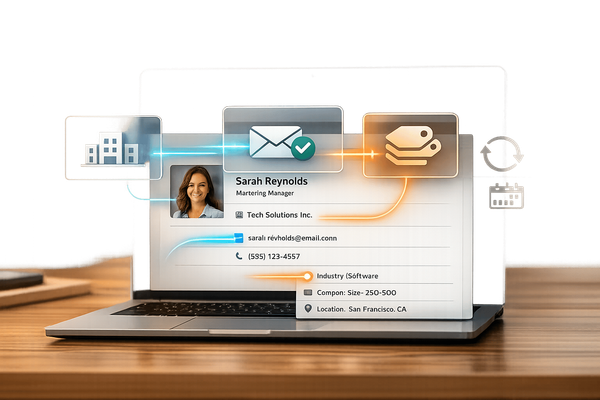
AI-powered tools are designed to verify and enhance data from a wide range of sources. For example, FullEnrich uses data from 20 providers, while Clearbit taps into over 250, ensuring precision even as databases naturally degrade over time. These tools go beyond simply validating emails and phone numbers. They enrich records with over 30 additional data points, including technographics (what software a company uses), firmographics (like revenue and growth trends), and buying intent signals.
Real-time web crawling ensures data stays up-to-date by cross-checking it against current sources. Advanced verification processes can even reduce invalid phone numbers to less than 1%.
"Apollo enriches everything we have: contacts, leads, accounts...And we don't really have to touch it, it just works."
- Mark Turner, VP of Revenue Operations, Built In
Verified data can have a tangible impact. Cognism, for instance, has helped companies like Deep Cognition increase connect rates by 25% quarter-over-quarter by providing accurate phone numbers. This level of precision not only enhances data quality but also sets the foundation for smooth automation within existing systems.
Automation and Integration
One of the standout strengths of AI enrichment tools is their ability to integrate effortlessly into existing workflows. Platforms like Apollo and ZoomInfo offer native CRM integrations with systems like Salesforce, HubSpot, and Zoho. These integrations allow for automatic updates to contact records, flagging of job changes, and filling in missing fields through asynchronous processing that delivers results almost instantly. Apollo, for example, enriches contacts, leads, and accounts automatically through its workflow engine.
Real-time processing is another game-changer. Data submitted through web forms can be enriched on the spot, enabling leads to be routed to the right sales representative based on firmographic insights. Tools like Clay take this a step further by employing AI agents to research companies, qualify leads, and push data into CRMs using conditional logic - saving teams hours of manual work. Additionally, some platforms monitor "data health" by identifying duplicate entries and tracking changes in contact roles. These capabilities not only accelerate workflows but also ensure the data remains accurate and actionable.
Compliance and Data Security
Handling sensitive contact data comes with significant responsibility, and AI enrichment platforms are built to meet strict regulatory standards. Many leading tools are SOC 2 Type II certified and comply with privacy laws like GDPR, CCPA/CPRA, PIPEDA, and LGPD. These certifications ensure secure API authentication, encrypted data transfers, and adherence to data subject rights, such as access, correction, and deletion requests.
Compliance is woven into these platforms' processes. For instance, Apollo includes default safeguards like opt-out and do-not-contact settings, preventing marketing teams from inadvertently reaching restricted individuals. Some tools reduce risk further by aggregating data in real time instead of storing it permanently. When selecting a platform, it's essential to prioritize those with verified security credentials and strong data minimization practices, especially when managing contact data across regions with differing privacy laws.
How to do contact enrichment in Clay
Top AI-Powered Tools for Contact Data Accuracy
AI Contact Data Tools Comparison: Features, Pricing and Accuracy
When it comes to ensuring contact data accuracy, a few standout tools lead the way. Platforms like Enrich Fox, ZoomInfo, and Apollo each bring unique strengths to the table, offering solutions that cater to different needs. Here's a closer look at how these tools can help refine and enhance your data.
Enrich Fox
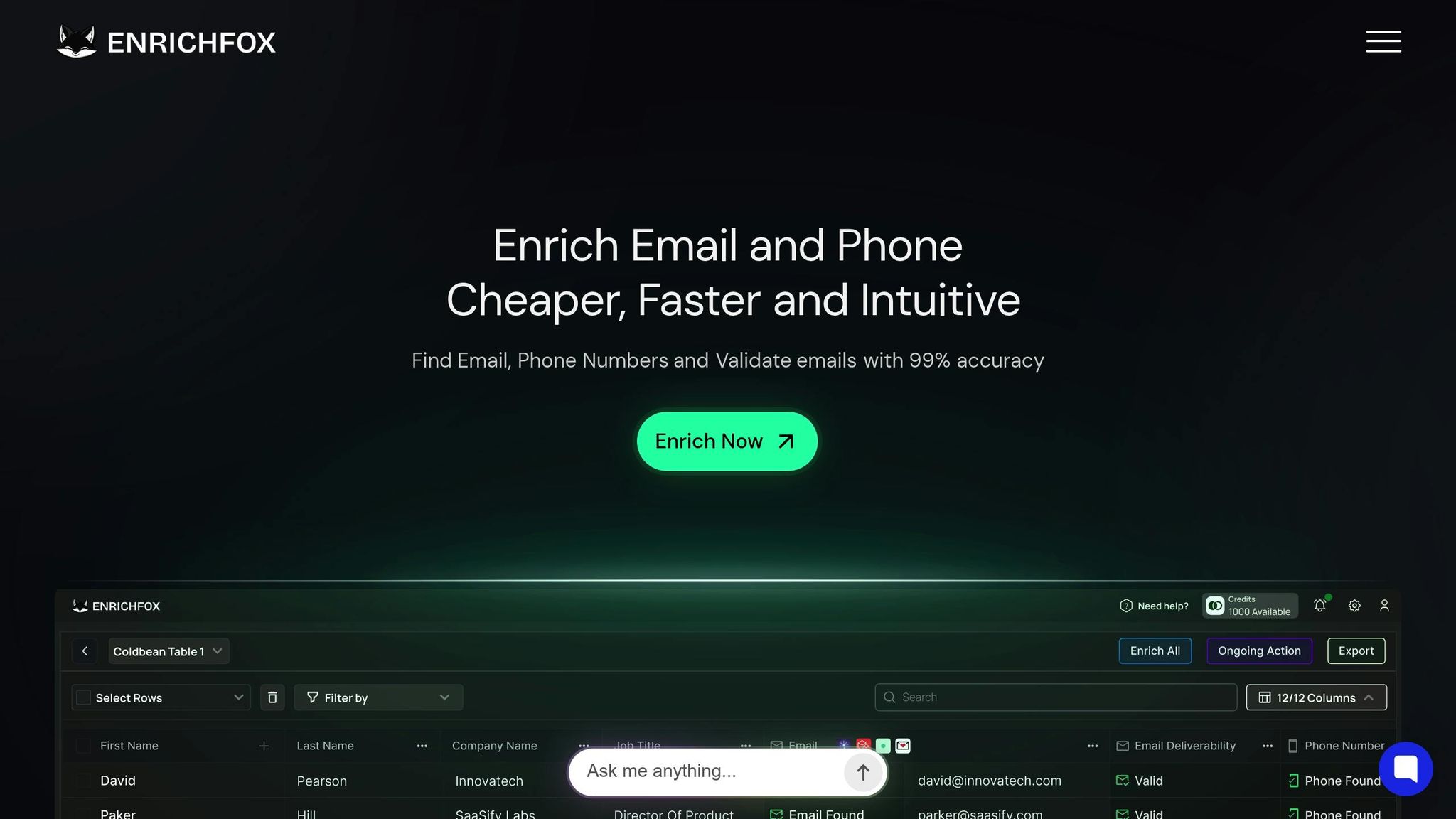
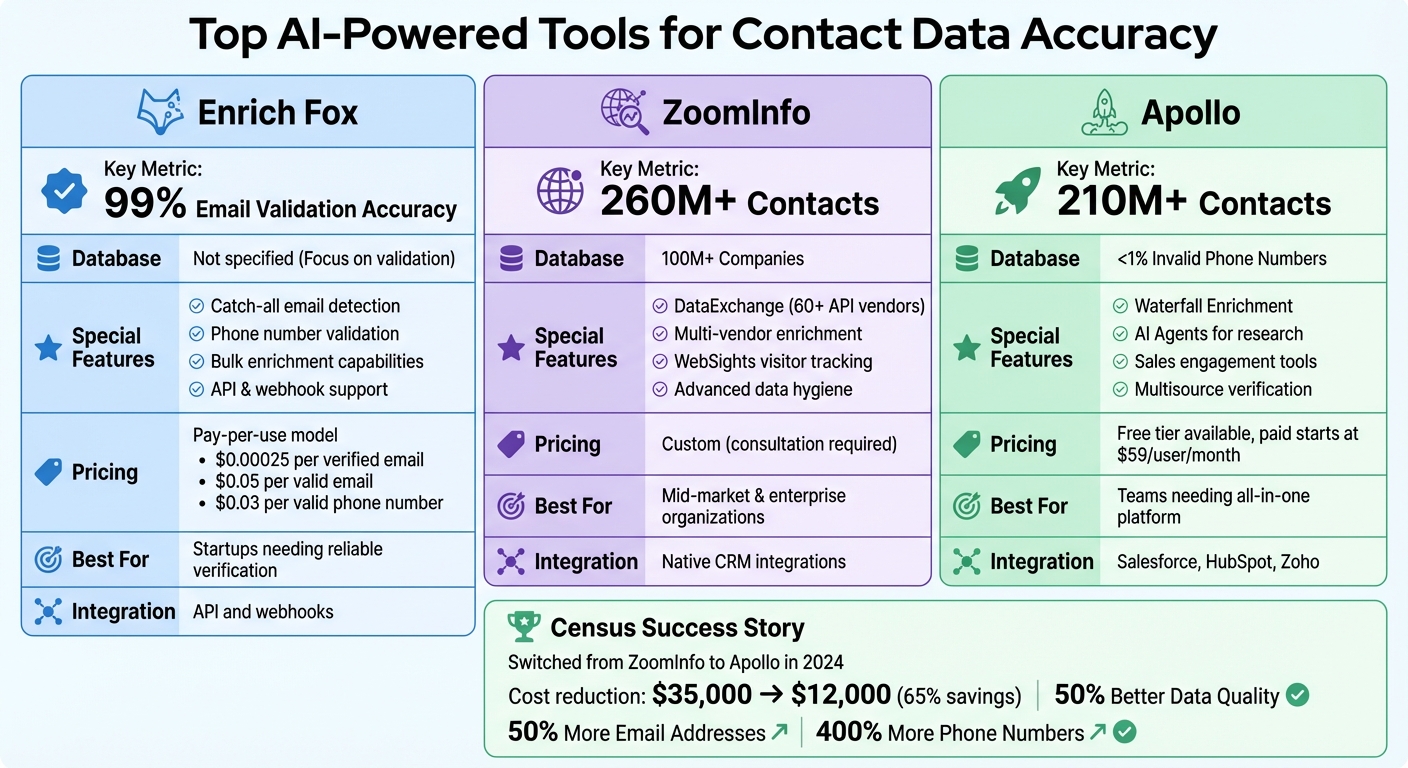
Enrich Fox (enrichfox.ai) delivers an impressive 99% email validation accuracy. It’s particularly adept at identifying catch-all emails and validating phone numbers, making it a go-to choice for improving outreach effectiveness. The platform also shines with its bulk enrichment capabilities, which can clean up large lead lists or enrich trial sign-ups in real time. Integration is seamless with API and webhook support, allowing you to automate data validation directly into your workflows.
Pricing is straightforward and budget-friendly, especially for startups or growing businesses. The pay-as-you-go model includes costs like $0.00025 per verified email, $0.05 per valid email, and $0.03 per valid phone number, with no need for long-term contracts.
ZoomInfo
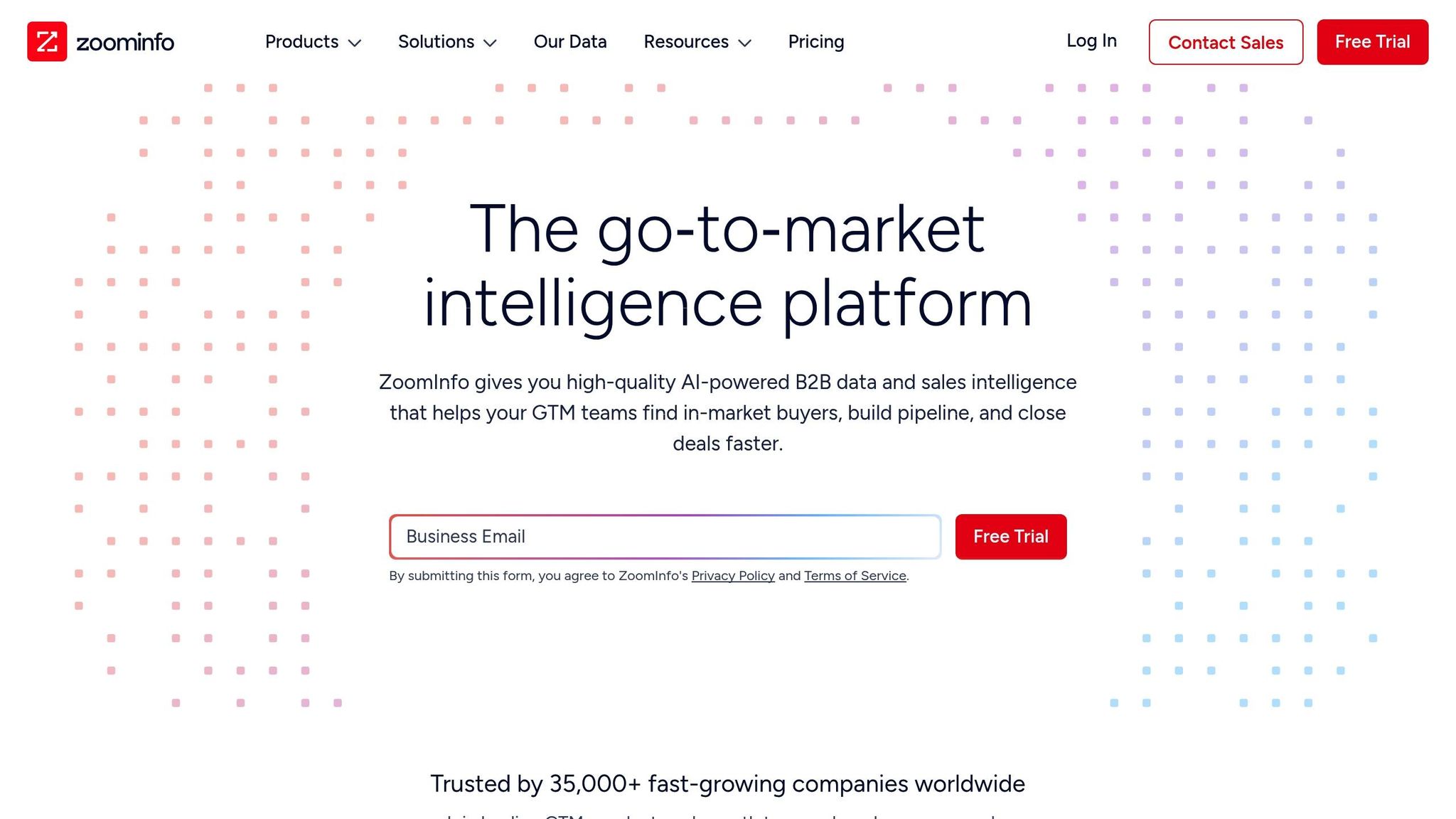
ZoomInfo positions itself as a heavyweight in the B2B intelligence space, boasting a database of over 260 million contacts across 100 million companies. One of its standout features is DataExchange, which connects with over 60 API-based data vendors. This allows users to assign primary, secondary, and even tertiary data sources for comprehensive multi-vendor enrichment.
The platform is tailored for mid-market and enterprise organizations needing advanced data hygiene and large-scale identity resolution. Another notable feature, WebSights, tracks visitor intent, helping sales teams identify companies actively researching their products. Pricing is customized and typically requires consultation, reflecting its focus on larger teams with bigger budgets.
Apollo
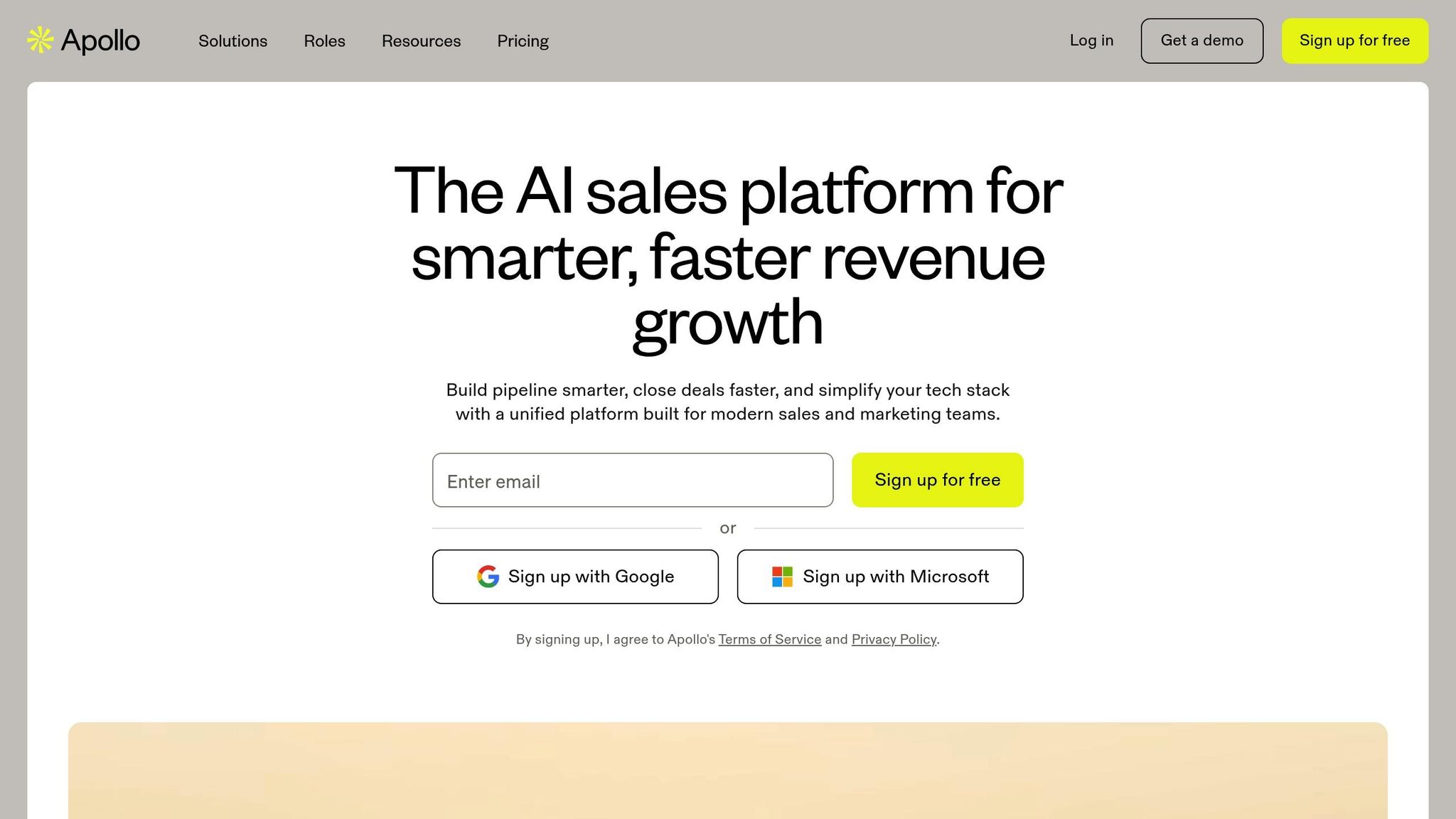
Apollo takes a different approach by combining sales intelligence with engagement tools in a single platform. It boasts a database of over 210 million contacts and uses multisource verification to keep invalid phone numbers below 1%. Its Waterfall Enrichment feature ensures maximum data coverage by cascading through multiple sources when the primary source comes up empty.
A notable example of Apollo’s impact comes from Census, which replaced its ZoomInfo and Outreach setup with Apollo in 2024. This switch resulted in cutting costs from $35,000 to $12,000 while achieving 50% better data quality, 50% more email addresses, and 400% more phone numbers.
"We benchmarked ZoomInfo versus Apollo, Clearbit, Lusha, and Seamless, and ultimately Apollo won on all fronts, especially in enrichment. Higher quality than ZoomInfo, greater breadth than Clearbit. And we cut our costs in half."
- Sylvain Giuliani, Head of Growth and Operations, Census
Apollo offers a free tier, with paid plans starting at $59 per user per month. Additionally, its AI Agents can handle custom research tasks, saving hours of manual effort.
Each of these tools has its strengths, making them valuable options for businesses looking to improve data accuracy while optimizing costs and efficiency.
Enrich Fox Compared to Other Tools
Enrich Fox stands out by prioritizing simplicity and offering transparent pricing. While competitors using waterfall models, like Clay and FullEnrich, typically achieve match rates of 65–85%, single-source vendors often fall between 25–40%. Enrich Fox, on the other hand, delivers an impressive 99% email validation accuracy, thanks to its dedicated catch-all detection. This makes it a strong choice for teams that value precision over sheer volume.
Clay, for example, operates as an enrichment marketplace, integrating over 75 tools (including Hunter and Apollo) and leveraging AI to scrape websites and create personalized messages. However, its credit-based pricing (starting at $149/month) and steeper learning curve may present challenges for teams managing complex workflows.
Dropcontact focuses on professional email discovery. While effective within its niche, it lacks features like phone validation and bulk enrichment, which are key strengths of Enrich Fox.
Findymail and Wiza primarily target LinkedIn prospecting, offering moderate email accuracy and limited phone validation. For teams engaging in multi-channel outreach, Enrich Fox's ability to verify both emails and phone numbers provides a more complete and versatile dataset.
Comparison Table
| Tool | Primary Strength | Email Accuracy | Phone Validation | API Support | Pricing Model | Best For |
|---|---|---|---|---|---|---|
| Enrich Fox | 99% email validation; catch-all detection | 99% | Yes | Yes (API + webhooks) | Pay-per-use ($0.00025–$0.05 per email) | Startups needing reliable verification |
| Clay | Waterfall enrichment with 75+ providers; AI automation | 65–85% (aggregated) | Via integrated tools | Yes | Credit-based (starts $149/mo) | Teams building complex workflows |
| Dropcontact | Professional email discovery | High (typically embedded) | Limited | Yes | Typically integrated | Users already on waterfall platforms |
| Findymail | LinkedIn-focused prospecting | Moderate | Limited | Yes | Varies | LinkedIn-heavy outreach |
| Wiza | LinkedIn scraping and enrichment | Moderate | Limited | Yes | Varies | Quick LinkedIn list building |
For U.S.-based teams looking for a cost-effective option with reliable data validation for both emails and phone numbers, Enrich Fox offers a straightforward and budget-friendly solution.
How to Implement AI-Powered Contact Accuracy Tools
Pilot Testing and Evaluation
The first step to effectively implementing AI-powered contact accuracy tools is running targeted pilot tests. Start by testing a sample of 500–2,000 contacts. Use the same contact list to compare multiple providers, and measure performance using clear metrics like open rates, click rates, lead quality, SQL conversion rates, and cost per acquisition.
When analyzing results, classify outcomes into three categories: 100% (positive), 80% (verified), and 0% (undeliverable). This classification helps predict campaign performance more accurately. For instance, in 2025, Sylvain Giuliani, Head of Growth and Operations at Census, conducted a benchmark test comparing ZoomInfo, Apollo, Clearbit, Lusha, and Seamless. The result? A 50% improvement in data quality and a 50% reduction in data procurement costs after switching providers.
Tailor your tests to different business sizes, as workflows for SMBs and enterprises can vary significantly. To assess ROI, calculate the cost per high-confidence result. These pilot tests provide a foundation for continuous improvement through feedback loops.
Building a Feedback Loop
Did you know that up to 50% of CRM data becomes outdated each year? To maintain accuracy, track bounced emails, job change alerts, and incorrect contact details regularly. Train your sales team to flag false positives and use bounce notifications to refine AI verification rules.
The "1-10-100 rule" highlights the importance of addressing data issues early: it costs $1 to verify data at the point of capture, $10 to clean it later, and $100 if left unchecked. Inaccurate prospect data can waste about 500 hours annually per sales rep - equivalent to 62 full workdays. By monitoring deliverability and keeping audit logs, you can avoid these inefficiencies while ensuring compliance with regulations like CCPA for California residents and GDPR for international contacts.
Refining your data processes and integrating specialized tools can drastically improve overall efficiency.
Tool Combination Strategies
No single tool can handle everything perfectly, which is why combining specialized solutions often delivers the best results. For example, waterfall enrichment - querying multiple data providers in sequence - can boost contact discovery rates to over 80%, compared to 40–50% with single-source tools. A practical approach might involve using Enrich Fox for its 99% email validation accuracy and catch-all detection, then complementing it with ZoomInfo for firmographic data and company insights.
A real-world example: Built In implemented automated enrichment in November 2023 to process 100,000 leads daily, completely eliminating manual data entry. This kind of tool integration not only scales operations but also ensures data quality.
For maximum efficiency, connect your tools directly to your CRM, such as Salesforce or HubSpot. This allows for real-time enrichment at the point of data capture, preventing bad data from entering your system in the first place. Establish clear field mapping rules to decide whether the AI tool should overwrite existing data or only fill empty fields, preserving any manual research already done. Companies leveraging enriched data report an average 25% increase in sales revenue.
Conclusion
AI-driven contact data tools have become a game-changer for U.S. sales and marketing teams. With nearly 70% of CRM data becoming outdated, incomplete, or inaccurate within a year, the need for precise, up-to-date information is critical. Poor data quality directly impacts revenue, while companies that maintain accurate contact data enjoy a clear edge over competitors.
The transition from static databases to real-time verification marks a major operational shift. Tools like Enrich Fox, ZoomInfo, and Apollo address the core issue: B2B contact data deteriorates at a rate of 2.1% per month, adding up to about 22.5% annually. This shift to real-time enrichment aligns with earlier discussions, emphasizing the importance of AI-enabled solutions throughout the data lifecycle.
The productivity benefits of these tools make the case even stronger. AI solutions can reduce prospecting time by a staggering 89%. Companies using enriched data report, on average, a 25% boost in sales revenue. Even better, providers offering high-accuracy data (97% or more) cost about 16.5% less overall.
Streamlined implementation ensures these tools deliver long-term value. Real-time data enrichment at the point of capture, automated CRM syncing, and continuous feedback loops create a dynamic database that stays accurate without requiring manual input.
"We don't really have to touch it, it just works."
- Mark Turner, VP of Revenue Operations, Built In
For U.S. teams operating in fast-paced, competitive markets where speed and personalization are key, investing in AI-powered contact accuracy tools isn’t just smart - it’s essential for staying ahead and driving consistent growth.
FAQs
How can AI tools improve the accuracy of contact data?
AI-driven tools are transforming the way businesses maintain contact data, offering precise methods to validate and update details like emails, phone numbers, and company information. By leveraging advanced algorithms, these tools tap into a variety of sources - public records, social media profiles, and proprietary databases - to verify and enhance CRM data in real time. They’re equipped to spot invalid or duplicate entries, confirm phone numbers, and even validate tricky "catch-all" email domains, ensuring your data stays accurate and actionable.
Take Enrichfox.ai, for example. Known for its 99% accuracy in email and phone number validation, this platform offers features like bulk enrichment, API integrations, and live chat support. While other tools like Apollo, ZoomInfo, and Clay provide comparable services, Enrichfox stands out with its commitment to near-perfect accuracy and user-friendly design, making it an excellent option for businesses prioritizing efficient and secure data management.
How can AI tools help reduce costs in contact data enrichment?
AI-powered tools for contact data enrichment streamline processes by automating tasks like verifying emails, phone numbers, and firmographic details. This automation not only trims down labor costs but also accelerates prospecting, freeing up sales and marketing teams to concentrate on more strategic efforts. Plus, these tools integrate effortlessly with CRMs and existing workflows, eliminating the need for additional software and cutting down tech expenses.
One tool that shines in this space is Enrichfox.ai, known for its 99% accuracy in validating emails and phone numbers. It offers flexible pricing options that allow businesses to handle large contact lists with predictable costs. Unlike competitors such as ZoomInfo or Apollo, Enrichfox’s pay-as-you-go model ditches per-seat fees, reducing the cost per qualified lead by up to 40%. This makes it a smart pick for companies dealing with high data volumes. By enhancing data quality and lowering operational costs, AI-driven enrichment tools enable U.S. businesses to get the most out of their outbound campaigns.
How do AI-powered tools ensure they comply with data privacy regulations?
AI-powered contact enrichment tools are built to comply with privacy laws like GDPR and CCPA. They ensure this by sticking to data that’s either publicly available or obtained with consent. Features like automated validation help weed out invalid or "catch-all" addresses, while users can delete or update personal records, giving them more control over their information.
To safeguard data, these tools use strong security measures, including encryption, access controls, and audit logs, ensuring protection throughout the enrichment process. They also integrate seamlessly with CRM systems and APIs, respecting privacy settings and enabling businesses to enforce their own consent policies. With transparency and security at the forefront, these tools not only help businesses stay compliant but also improve the accuracy of their data.